Rainbow Circle
Mission
Why It Is Structural, Not Supplementary
Project K4 serves QBAIPOC+ learners and the wider community. Many of the young people these programs are built for have had experiences in technical and gaming spaces that taught them those spaces are not for them. No curriculum, however well designed, overcomes that on its own.
Rainbow Circle is the program that makes the other programs work: it establishes conduct standards, builds peer leadership, provides creative outlets outside the technical tracks, and gives learners a place to be a whole person rather than a set of skills.
Focus Areas
- Creative Arts
- Community Engagement
- Belonging & Inclusion
- Wellness Practices
- Peer Leadership
- Mentorship
- Community Events
- Digital Storytelling
D.R.I.V.E. in Rainbow Circle
- Design — learners design community events, campaigns, creative works, and the norms of their own spaces.
- Research — listening to community need, understanding lived experience, and gathering honest feedback about what is and is not working.
- Innovate — creative works, mixed-media projects, and new formats for gathering and celebrating.
- Visualize — careers in arts, community organizing, education, youth development, communications, and nonprofit leadership.
- Engineer — facilitation skills, conflict resolution, event production, and the practical craft of leading people.
Track Record
- LGBTQIA+ Dungeons & Dragons. Hosted on Discord in collaboration with Project K4’s INdigenous Games Design programme — a moderated table where players can be themselves without negotiating for it first. It is also, quietly, a games-design programme: running a campaign is systems design, narrative design, and facilitation at once.
- The frybread fundraiser. The first was held on 4 July 2026 at Bishop Museum, and it will recur at other community events. It raises funds and it shares Native American food culture in a place where that culture is not often encountered — the second purpose being at least as valuable as the first.
Practices
- A clearly stated and consistently enforced code of conduct across every Project K4 program
- Peer mentorship pairing newer learners with experienced ones
- Regular open-studio and open-lab sessions with no performance expectation
- Community showcases where learners present work to families and the public
- Referral relationships with qualified wellbeing and support services
- Deliberate recruitment and visible representation of instructors and mentors from the communities served
Scope note
Jack Hobbs IV
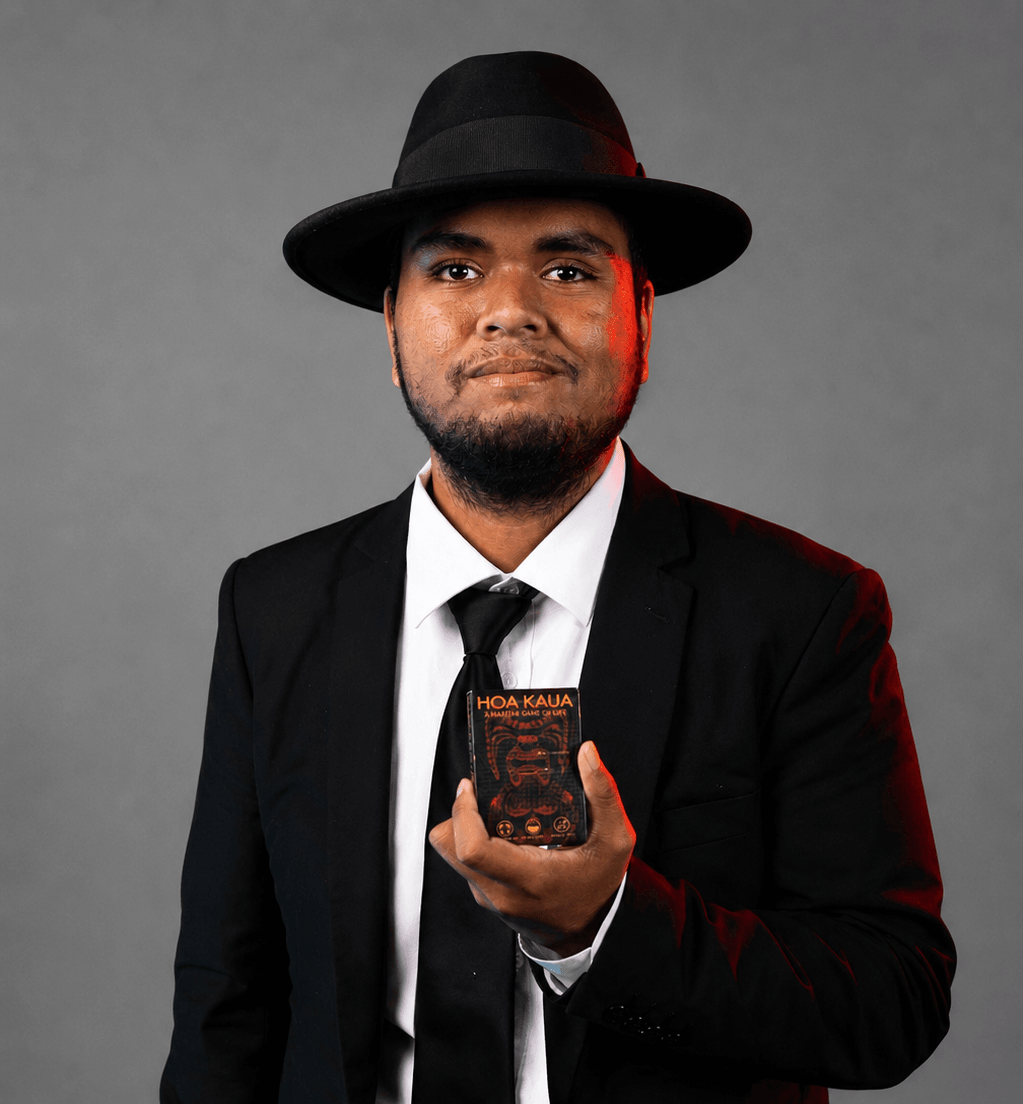
Jack K. Hobbs IV is a 23-year-old Hawaiʻi-based game designer, educator, community organizer, and tabletop game professional whose work bridges game development, Indigenous storytelling, youth mentorship, cultural education, and community-centered creative technology. He serves as Chief Operating Officer of Project K4, a QBIPOC educational organization based in Hawaiʻi, and is the founder of INdigenous Games Design, a Project K4 D.R.I.V.E. program licensed to Ka Makani Kāʻili Koa’s Under the Helmet STREAMY initiative.
Raised in Nānākuli and active in Hawaiʻi’s game-development community since age 16, Hobbs brings approximately seven years of experience in game design, development, and gaming community leadership. His journey began as a student at Nānākuli High School, where he was introduced to game design through community-based educational programming. Since then, he has grown from student designer to instructor, advisor, program founder, convention leader, professional Dungeon Master, and game-industry advocate.
Hobbs is also a Co-Owner of Theorycraftist Games, a Hawaiʻi-based game company rooted in the belief that games can teach systems thinking, culture, social change, creativity, and collaboration. In his capacity as a game designer with Theorycraftist, he has co-developed a diverse portfolio of tabletop and interactive game concepts, including Hō‘akaua, a competitive card game inspired by the wars, warriors, and martial traditions of ancient Hawaiʻi; The Depression Game, a social deduction game in which players take on the roles of high school students navigating the daily realities of depression; The Nānākuli Esoteric Order of Investigators, a mystery and time-travel game originally envisioned as an augmented-reality experience where students move back and forth through time to solve mysteries connected to Nānākuli High School; and Namja Myeon, a playful restaurant strategy game in which one player serves as the cook while others play as devoted fans, competing to build the most successful restaurant in town through K-pop-inspired humor, food culture, and themed ingredients.
Across these projects, Hobbs’ design work demonstrates a broad creative range: culturally rooted competitive systems, socially conscious educational games, mystery-driven narrative design, augmented-reality concepts, comedy-based tabletop mechanics, and youth-centered interactive storytelling. His work reflects a commitment to designing games that are not only entertaining but also capable of opening conversations about identity, history, mental health, community, and imagination.
As founder of INdigenous Games Design, Hobbs champions tabletop games, digital games, roleplaying systems, worldbuilding, and interactive storytelling as tools for cultural education, leadership development, and creative career pathways. His approach centers Indigenous perspectives, local youth, and community knowledge, helping students understand that games are not only entertainment but also systems of learning, identity, strategy, and imagination.
Hobbs has been involved in Hawaiʻi’s gaming and convention ecosystem for nearly a decade. At age 18, he began teaching game design nationally and entered senior leadership roles with both Kawaii Kon and TableTop Con, giving him approximately five years of experience as a game-design educator and convention leader. By age 20, he was serving as an advisor and professional Dungeon Master, bringing approximately three years of experience in advanced mentorship, tabletop facilitation, campaign design, and collaborative storytelling.
Beyond the game industry, Hobbs has held leadership and service roles across Native Hawaiian, youth, civic, and charitable programs. He previously served as an officer of Nā Koa O Ka Mōʻī, also known as The King’s Guard, under Ka Makani Kāʻili Koa’s Nā Koa Hawaiʻi programs, and serves as a Unit Commander supporting Shriners Children’s community service activities. These experiences continue to inform his leadership style: disciplined, youth-centered, culturally responsible, and rooted in service.
Currently pursuing a degree in Game Development, Hobbs represents a rising generation of Hawaiʻi-based game creators building pathways for Indigenous, local, QBIPOC, and underrepresented students in the global games industry. His long-term vision is to expand Hawaiʻi’s presence in game development by creating programs, games, and educational models that prepare students not only to play in imagined worlds but to design, lead, and own them.
Hobbs welcomes scholarship, mentorship, publishing, industry, and educational partnership opportunities that support his continued development as a game designer, educator, and cultural technology leader.